SEO for moving companies
Be the mover they find on the map.
Moving company SEO, Google Business Profile, Local Services Ads and websites. Tell us where you move people and an independent agency can prepare a written proposal.
- Free to ask
- No obligation
- Your choice at every step
- Built for movers
Your proposal
Get your moving company SEO proposal
Tell us where you move people and which moves you want more of. An independent marketing agency that works with movers can look at how your company shows up on Google today and prepare a written proposal.
- How your map listing and your site show up when people search for movers in your area.
- Which channels fit your trucks, your area and the moves you want: SEO, Local Services Ads, Google Ads, your website.
- What the work covers, set out in writing, before you decide anything.
Free to ask. An independent agency can reply.
Search, map, ads
How movers get found
- GBPGoogle Business ProfileThe listing behind the map pins when someone searches for movers near them.
- LSALocal Services AdsAds shown prominently in Google Search, paid per lead.
- USDOTThe number interstate movers must showFor interstate household goods movers, 49 CFR 375.207 puts it in every ad.
- FreeAsking for a proposalNo cost and no obligation to hire anyone.
What the work covers
Search, map, ads and the site they land on
A customer who needs a mover searches, looks at the map, reads a few listings and asks for a quote. Each service below is one stop on that route, and each has its own guide. Want SEO on a set monthly price? See the moving company SEO pricing.
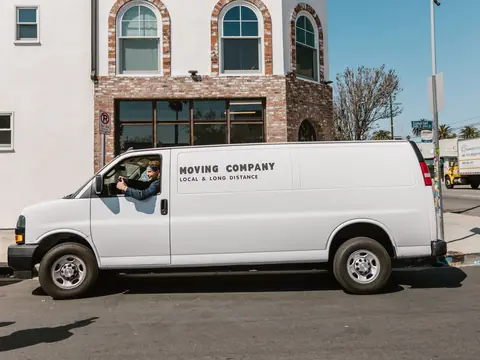
Local SEO for movers
Your Google Business Profile, service areas, categories, photos and the city pages behind the map pins.

Google Ads for moving companies
Search ads and Local Services Ads for the moves you want, ideally run in an ad account in your own company’s name.

Moving company website design
A fast site with a quote form, real photos, the pages your customers look for and your USDOT number where it applies.

Moving leads
Shared, exclusive and own-channel leads: what each one is, and how to build leads that are yours alone.

Moving company marketing
The whole plan in one place: which channels fit a local mover, a long-distance mover or a moving and storage company.

Reviews strategy
A plain routine for asking every customer for an honest review, within Google’s and the FTC’s rules.


Many customers look at the map first.
Get your company on it the honest way, with a written proposal from an independent agency.
How it works
From the form to a written proposal
Four stops, and no obligation at any of them.
- 1
Tell us about your moving company
Where you move people, how many trucks you run, and which moves you want more of: local, long distance, commercial, packing or storage.
- 2
An agency can look at your map and search
An independent marketing agency that works with movers can look at your Google listing, your site and the searches in your area.
- 3
The agency can prepare a proposal
What the work would cover and how it would run, set out in writing so you can compare it with anything else on the table.
- 4
You decide
Take it, change it or leave it. Asking costs nothing and you never have to hire anyone.
The search
What moving company SEO is
Moving company SEO is the work of getting your moving company found when people search Google for a mover. The phrase covers more than one thing, because a search for movers usually shows more than one kind of result. There are ads at the top, there is often a map with a few listings under it, and there are the ordinary results below. SEO for movers is mainly about the map and the ordinary results; ads are bought separately, and a good plan looks at all three together.
Two points from Google itself set the ground rules. First, “It doesn’t cost any money to appear in Google Search results, no matter what anyone tries to tell you.” Second, Google doesn’t accept payment to crawl a site more often or to rank it higher, and for the map it says there is no way to request or pay for a better local ranking. So SEO is not a fee paid to Google. It is work on your listing, your website and your reputation that makes it easier for Google to see what your company does and where.
That is also why nobody can sell you a position. Google says plainly that no one can promise a top ranking, and it warns business owners to beware of SEOs that claim to, that claim a “special relationship” with Google, or that advertise a “priority submit” to Google. What an agency can do is the work, done in the open, and report on it honestly.
The three places a mover can show up
- Ads at the top. Local Services Ads and Google Ads search ads. You pay for these, per lead or per click. See Google Ads for moving companies.
- The map listings. These come from Google Business Profile. Google ranks them mainly on relevance, distance and popularity. See local SEO for movers.
- The ordinary results. Your website’s pages: your services, the cities you serve, your long-distance moves. See moving company website design.

The mapYour Google Business Profile comes first
For a local search, the map listings are often the first thing a customer reads. Google says local results are mainly based on relevance, distance and popularity. Relevance is how well your profile matches what someone searched for, which is why Google advises complete and detailed business information. Distance is how far your business is from the person searching. You cannot change where a customer is standing. What you can do is keep the profile complete and accurate and earn genuine reviews.
Google’s own guidelines for profiles are short and worth knowing before anyone touches your listing:
- Your name is your real name. It should reflect your business’s real-world name, as used on your trucks, your website and your paperwork. Keywords such as “Best Movers Near Me” do not belong in the name, or in the address lines.
- As few categories as possible. Choose the most specific category that fits your core business, and do not use categories only as keywords.
- One profile per location. Google says not to create more than one page for each location of your business.
- Keep your address and add your service areas. A mover that serves customers at its address and also travels to them can enter both the address and the service area. Your real address stays on the profile; the service areas say where your trucks go.
- No virtual offices. A service-area business cannot list a “virtual” office unless that office is staffed during business hours.
Reviews matter to every customer reading the map, and Google’s rules on them are strict. Google’s Maps policy does not allow reviews that have been paid for, reviews posted from several accounts at one person’s request, or incentives such as discounts in exchange for reviews. It also bans discouraging negative reviews or asking only happy customers. The safe routine is to ask every customer for an honest review and offer nothing for it. The reviews guide sets that routine out step by step.

The siteCity and service pages your customers search for
Your website is where the ordinary results point, and where many map visitors go before they ask for a quote. Google says its ranking systems are designed to put helpful, reliable information created to benefit people ahead of content made to manipulate rankings. For a mover, helpful means pages that answer what a customer is actually asking: do you move people in my town, do you do long distance, can you pack, can you store, what happens on moving day.
City pages are where many moving company sites go wrong. Google’s spam policies name doorway abuse: having multiple domain names or pages targeted at specific regions or cities that funnel users to one page. A page for each town that only swaps the town’s name is exactly that. A city page earns its place when it says something true and specific about moving there: the neighborhoods you serve, the kind of homes and buildings, access and parking on moving day, and the moves you do from there.
| Page | What it answers for the customer |
|---|---|
| Local moves | Do you move people across town, and how does a local move work with you? |
| Long-distance moves | Do you go interstate, and what is your USDOT number? |
| Packing and storage | Can you handle the whole job, not only the truck? |
| Commercial and office | Can you move a business with the least time lost? |
| City pages | Do you really serve my town, and what do you know about it? |
The site also has a job beyond rankings. If you run Google Ads, the page an ad sends people to is judged as part of its Quality Score under “landing page experience”, which Google describes as how relevant and useful your landing page is to people who click your ad. A clear page with a quote form is good for both.
The adsAds above the map: Local Services Ads and Google Ads
SEO is steady work on your listing and your site. Ads are the paid places at the top of the page, and two kinds matter most for movers.
Local Services Ads. Google describes them as a way to advertise on Google and receive leads directly from potential customers, with leads coming in as phone calls and messages sent through the ad. You pay only for leads related to your business and the services you offer. The ad is shown prominently in Google Search results when people search for the services you offer in the areas you choose. In select verticals the ad can carry the Google Verified badge. One line in Google’s help matters for every busy crew: if you regularly fail to answer calls or respond to messages, your ad ranking may be affected. Check eligibility for your trade and area in Google’s Local Services Ads sign-up.
Google Ads search ads. These are the text ads for searches you choose. Where an ad shows depends on its Ad Rank, which Google says is calculated from several factors, including your competition, the context of the person’s search and your ad quality at that moment. You set a daily budget for each campaign and can change it at any time. The full guide is Google Ads for moving companies.
Ads and SEO work together: ads can bring quote requests while the work on your profile and site builds up. Many owners also buy moving leads from lead sellers; that guide explains how shared and exclusive leads differ from leads your own channels bring in.

The rulesRules a mover’s marketing has to follow
Moving is one of the few trades with a federal rule about advertising. Under 49 CFR 375.207, interstate household goods movers “must publish and use only truthful, straightforward, and honest advertisements.” Every advertisement must include the mover’s name or trade name as it appears on its USDOT registration, and its U.S. DOT number. If you move households across state lines, federal rules require your USDOT number in your ads. A good agency builds that into every ad from the start, and shows it on the landing pages too; ask a lawyer whether your website and profiles count as advertisements for your company. The article on the USDOT number in your ads explains it in full.
Google’s spam policies are the other rulebook. An agency should never buy or sell links for ranking purposes, fill pages with keywords to manipulate rankings, or build doorway pages for cities you do not really serve. Google calls these spam, and it is the business owner’s site that carries the result.
Good to know
The FTC’s endorsement guides say advertising agencies and similar intermediaries may be liable for deceptive endorsements they help create or spread, and the business can be liable too. Fake reviews, paid posts without a disclosure and bought followers are a risk for both you and your agency.
The agencyWhat to ask before you hire anyone for SEO
Google publishes a page called “Do you need an SEO?” with questions to ask before hiring one. They fit a moving company well. Ask any agency, including the one this site passes your details to:
- Can you show me examples of your previous work?
- Do you follow the Google Search Essentials?
- What kind of results do you expect to see, and in what timeframe? How do you measure your success?
- What’s your experience in my industry, and in my city or region?
- Will you share with me all the changes you make to my site?
Google is also blunt about one answer: if an SEO promises that its changes will put you in first place in search results, find someone else. Two more questions are your own to add. Ask who will own the Google Business Profile, the ad accounts, the domain and the website, and get the answer in writing; the safe answer is that they stay in your company’s name. And ask how quote requests will be counted, so you can see what the work brings in.
Sending the form here starts that conversation. Moving Company SEO is an independent referral service, not an agency: your details go to an independent marketing agency that works with movers, which prepares any proposal. You read it, ask your questions and decide.

What moving SEO covers
- Your Google Business Profile: name, categories, service areas, photos
- City and service pages your customers search for
- Local Services Ads and Google Ads in your own accounts
- A fast site that turns a visit into a quote request
- A plain routine for asking every customer for a review
Questions
Questions movers ask about SEO
Straight answers about proposals, accounts and who does the work. More are on the questions page.
- Is Moving Company SEO a marketing agency?
- Can anyone promise my moving company the top spot on Google?
- Can I pay Google for a better place on the map?
- Do I keep my Google listing, website and ad accounts?
- Do interstate movers have to show a USDOT number in ads?
- Which is the best company for SEO services?
- What is a good slogan for a moving company?
- Does asking for a proposal cost anything?
Is Moving Company SEO a marketing agency?
No. Moving Company SEO is an independent referral service, not a marketing agency. When you send the form, your details go to an independent marketing agency that prepares any proposal and does any work. This site does no marketing work itself.
Can anyone promise my moving company the top spot on Google?
No. Google says no one can promise a top ranking, and that if an SEO promises first place you should find someone else. A proposal should say what work will be done and how it will be measured, not where you will rank.
Can I pay Google for a better place on the map?
No. Google says there is no way to request or pay for a better local ranking. Ads are a separate, paid placement.
Do I keep my Google listing, website and ad accounts?
You should. Ask that any proposal keeps your Google Business Profile, your ad accounts, your domain and your website in your own company’s name, and get that in writing before work starts.
Do interstate movers have to show a USDOT number in ads?
Yes. Under 49 CFR 375.207, an interstate household goods mover’s advertisements must include its name or trade name as on its USDOT registration and its U.S. DOT number, and must be truthful, straightforward and honest. See the article on the USDOT number in your ads.
Which is the best company for SEO services?
This site does not rank or review agencies. Use Google’s own questions instead: ask for examples of previous work, whether the agency follows the Google Search Essentials, what results it expects and in what timeframe, its experience with movers, and whether it will share every change it makes.
What is a good slogan for a moving company?
One that is true. If you move households across state lines, federal rules say your advertising must be truthful, straightforward and honest, so a slogan that promises what a crew cannot always deliver is a risk. Plain promises about how you work are safer than claims about being the best.
Does asking for a proposal cost anything?
No. Asking is free and you never have to hire anyone. You read the written proposal and decide.
Be the pin they pick.
Tell us where you move people. An independent agency that works with movers can prepare a written proposal, and the choice is always yours.